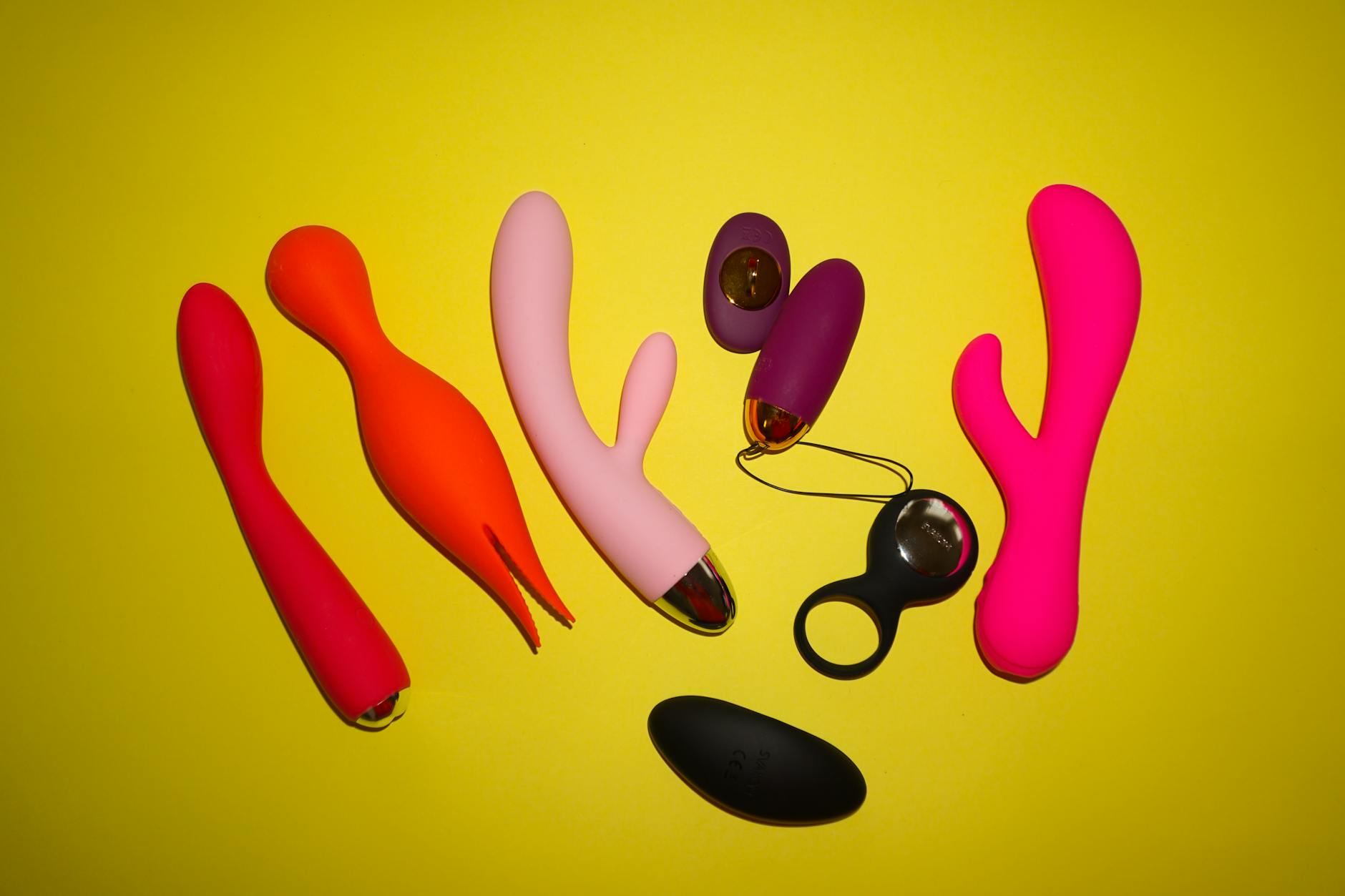
Let's be real about mismatched desire
One of you wants sex twice a week. The other is thinking about it maybe once a month. Neither of you is broken. Neither of you is wrong. And yet somehow, this mismatch has become the thing you don't talk about, or you talk about constantly, and either way it hurts.
This is one of the most common friction points in long-term relationships, and almost no one addresses it directly. We talk about dead bedrooms. We talk about libido killers. What we rarely discuss is how to rebuild intimacy when desire genuinely isn't aligned, and how a tool like a lemon clitoral vibrator can actually help both partners feel less alone in that gap.
The real problem isn't the mismatch itself
Sex researcher Emily Nagoski calls it "desire discrepancy," and it exists in most relationships. The actual problem is usually one of these three things:
First, the higher-desire partner starts interpreting the lower-desire partner's lack of initiation as lack of care or attraction. "If they loved me, they'd want me." This is rarely true. Desire is context-dependent, stress-dependent, sleep-dependent, hormone-dependent. It's not a measure of love.
Second, the lower-desire partner feels pressured, which tanks desire further. Pressure is genuinely one of the fastest ways to kill sexual interest in someone who's already less inclined. They start avoiding touch, avoiding bedtime conversations, avoiding anything that might escalate.
Third, the higher-desire partner's pleasure gets sidelined. They stop asking. They feel rejected. They start disconnecting. Both people end up lonely.
A lemon vibrator doesn't fix the underlying conversation. But it can shift the dynamic in three specific ways.
How a clitoral vibrator changes the equation
Let me walk you through this carefully.
When you introduce a lemon sexual toy like the Lem into partnered sex, you're not replacing your partner. You're literally taking pressure off them. If your partner has lower desire, full-body sex might feel like a marathon. But if you're getting clitoral stimulation independently via a clitoral vibrator, they can be present and intimate without having to perform the specific thing that exhausts them.
Here's the shift: they don't have to give you an orgasm. They just have to be there with you while you give yourself one. That's proximity and presence, not pressure.
For the higher-desire partner, you're also removing the feeling that your pleasure is a problem. You're saying, "My desire is real, and I'm going to honor it. I'm not waiting around. I'm also not blaming you." That tiny shift in agency can be revolutionary.
Second, a toy like the Lem creates novelty in the bedroom without requiring your partner to want something new. Novelty is powerful for long-term couples. It breaks the pattern. Your brain gets interested again. And if your partner is lower-desire, introducing something visual and tactile gives them something to focus on besides performance anxiety.
Third, and this matters: it gives you both permission to talk about sex differently. Instead of "Why don't you want me," the conversation becomes "How do we both feel good together." That's a completely different vibe.
Setting it up without the tension
Timing is everything here. Do not introduce this toy during a period of high resentment or right after a rejection. That will read as either punishment or desperation.
Instead, bring it up outside the bedroom. When you're calm, fed, not tired. Say something like: "I've been thinking about how we could both feel better about our rhythm together. I want to explore something that might help." That's it. No pressure, no implication that they're failing you.
Show them the toy separately. Let them hold it, ask questions, understand it's not a judgment on their body or their ability to please you. Toys are like lube. They're not replacements. They're tools that make certain things easier or feel different.
Then, when you use it together for the first time, keep expectations low. This is an experiment, not a performance. Your partner can touch you while you're using it. They can be inside you while you're using it. They can just watch. There's no script.
What matters is that you're together, you're both consenting, and you're both trying something that might help.
What actually works with a lower-desire partner
If your partner has genuinely lower desire, here are the things I see couples do that actually help.
One: Stop framing it as "more sex." Frame it as "more ways to feel close." A 15-minute session where you use a lemon clitoral vibrator and they're touching your body and you're making eye contact... that's intimacy. It doesn't have to become a full sex session.
Two: Schedule it. This sounds unromantic, but it removes the element of constant negotiation. "Friday nights are ours." Your partner knows it's coming. They can mentally prepare. They're not ambushed. Lower-desire partners almost always report that scheduled sex feels better because the pressure is gone.
Three: Let them participate differently. Maybe they're not interested in penetrative sex that night, but they'll hold you, talk to you, run their hands over your skin while you use a clitoral vibrator. That's still them being there with you. That still counts.
Four: Check in after, not during. Ask them later, not mid-sex, how it felt for them. Did they feel less pressure? Did they enjoy the novelty? Their feedback will shape what you do next.
When it's deeper than desire mismatch
I need to flag this: sometimes "low desire" is actually depression, burnout, medical issues, or relationship resentment that goes beyond sex. A toy won't fix that. Therapy will.
If your partner has lost interest in sex, connection, hobbies, and joy... that's not a libido problem. That's a health or relationship problem. Same if they're not engaging in non-sexual intimacy either. Mismatched desire is one thing. Complete emotional withdrawal is another.
Before you introduce a toy, ask yourself: is my partner interested in reconnecting at all? Or have they checked out? If it's the latter, you need a conversation with a therapist, not a conversation with a vibrator.
The gift underneath all of this
What I've noticed with couples who navigate desire mismatch well is that it actually deepens their understanding of each other. The higher-desire partner learns that their partner's slower burn isn't rejection. The lower-desire partner feels less guilt. Both people get to have pleasure.
A lemon vibrator can be part of that conversation. It's not the whole answer. But it's a really useful way to say, "Your pleasure and your desire matter. My pleasure and my desire also matter. We can both win here."
That's the actual goal.
People also ask
Can using a lemon vibrator alone make my partner jealous?
Not if you're transparent about it and not if they feel included. Jealousy usually comes from secrecy or feeling replaced. If you're using it together and they understand it's enhancing your time together, not replacing them, it typically goes fine. If you've been hiding it, that's a different conversation.
Should my partner touch me while I'm using a clitoral vibrator, or is that weird?
It's not weird at all. Many couples find it actually increases intimacy because you're both participating. They might touch your breasts, kiss you, hold you. Or they might just watch. There's no "right" way to do this.
What if my partner thinks using a toy means they're not enough?
That usually comes from insecurity that already exists. A toy doesn't create that. But it can surface it. If they say this, the response isn't to put the toy away. It's to have a conversation about what "enough" means. Their body isn't the only tool for pleasure. A vibrator isn't a statement about their capacity to pleasure you. It's a different sensation. Both can be true.
If my partner has low desire, will a toy actually increase their interest?
Maybe. Sometimes seeing you feel good, or feeling like there's less pressure on them, does spark something. But if the low desire is rooted in something else (health, stress, resentment, depression), a toy is addressing the symptom, not the cause. You might need to work on the underlying issue first.
How do I know if my partner will be open to this?
Start with curiosity, not assumption. Ask them, outside the bedroom, if they've ever thought about toys. Listen without judgment. Some people are immediately interested. Others need more information. Some are resistant for reasons that matter to them. Respect that. If they're not ready, pushing will backfire.
Can we use a lemon vibrator while my partner is inside me if they have lower desire?
Absolutely. Some lower-desire partners actually find this easier because they're not responsible for your orgasm. You're managing your own pleasure. They're just present. For some couples this is the sweet spot. Try it and see.
The closing move
Mismatched desire doesn't mean mismatched love. It means your bodies and your minds are wired differently. That's not a failure of the relationship. That's just data.
A lemon clitoral vibrator, used thoughtfully, is a way of saying: I respect how you work. I also respect how I work. We can both be okay.
If you're ready to explore this, start the conversation outside the bedroom. Be curious. Be kind. And remember that the goal isn't more sex. It's more connection, in whatever form works for both of you.
For more on rebuilding intimacy after misalignment, read how to use a lemon vibrator with your partner after years of solo pleasure and how to use a lemon vibrator when starting a new relationship after a long break.
If you're still feeling stuck on the relationship side, reach out to us. We're here to help you navigate this.