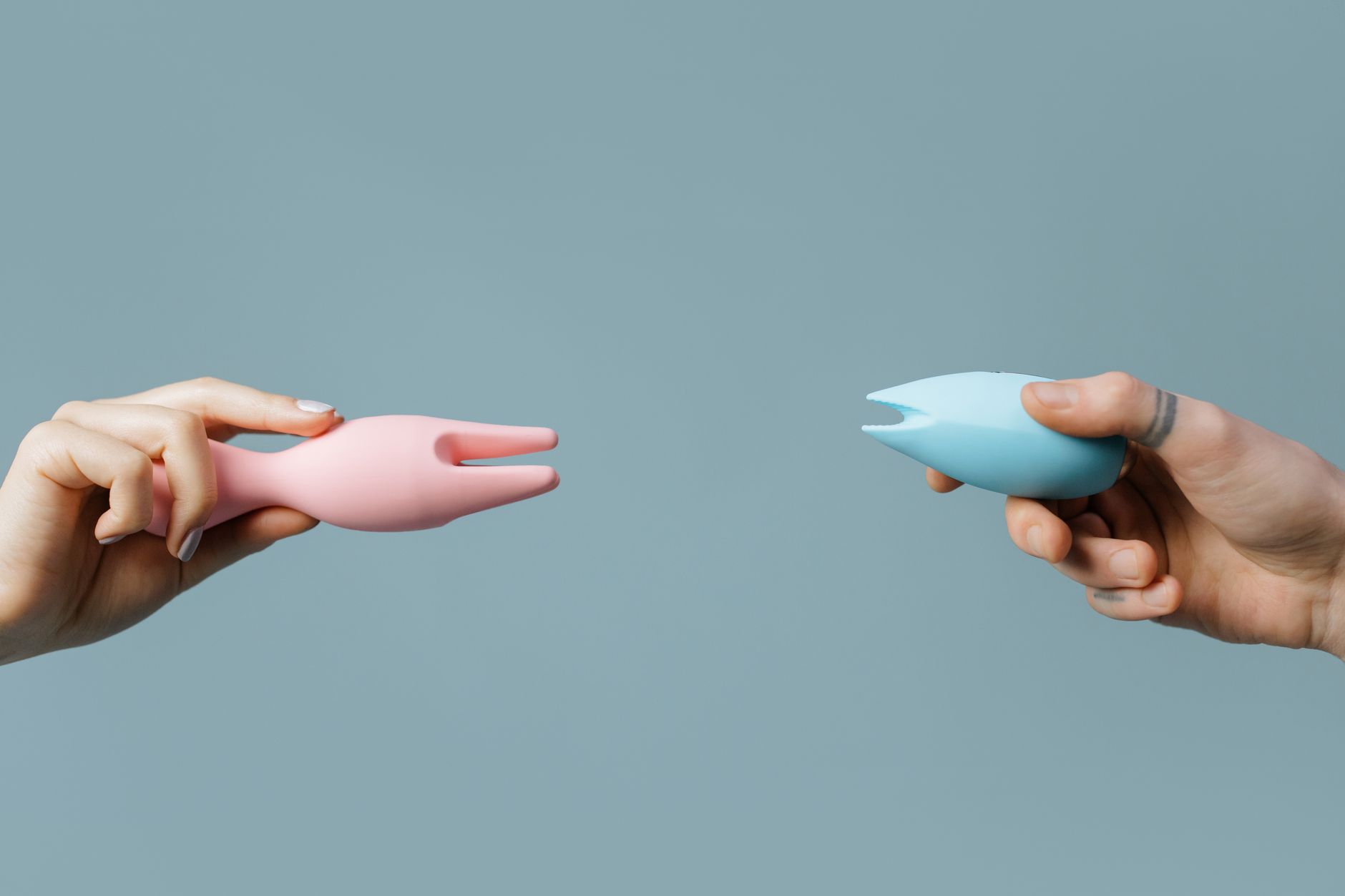
Let's talk about what aging actually does to your clitoris
Here's the thing nobody tells you: your clitoris doesn't shrivel or stop working. What changes is the tissue around it. Collagen production drops, skin thins slightly, and the delicate structures that support sensation lose some elasticity. That's not a death sentence for pleasure. It's a permission slip to change your approach.
The problem is friction. After 40, 50, or 60, direct rubbing that used to feel amazing can feel abrasive, overstimulating, or even uncomfortable. Your nerve endings are still there. They're still firing. But they need a different kind of signal.
Why suction changes everything
A lemon vibrator works through suction and gentle pulsing, not friction. This matters more than you'd think.
When you use suction on the clitoris, you're not pushing across sensitive tissue. You're creating a gentle vacuum that draws the entire clitoral body into the device, then releasing it rhythmically. The nerve endings get stimulated without the shearing force that can feel raw or irritating.
Think of it this way: a traditional vibrator is like running your finger across sandpaper. A clitoral suction device like the Lem is like applying steady, gentle pressure with a soft sponge. Same nerve activation. Zero friction burn.
This is why so many people who thought they'd lost sensation in their 40s and beyond discover that a lemon clitoral vibrator actually works better than anything they used at 25. It's not that you got broken. You just needed a better tool.
The aging advantage nobody talks about
Here's a plot twist: older people often report more intense orgasms with suction devices than younger users do.
Three reasons. First, mental clarity. You're not worrying about birth control or fertility or whether your thighs look a certain way. That cognitive load lifts, and your brain has more bandwidth for sensation. Second, you know your body. You're not trying to perform or match someone else's rhythm. You can be fully selfish and fully present at the same time. Third, suction tech actually improves with age because it bypasses the direct pressure that becomes uncomfortable.
Your clitoris at 55 isn't weaker than it was at 35. It's pickier about how it gets touched. That's actually progress, not decline.
Physical changes that make suction devices ideal
Four specific aging shifts that make a lemon vibrator the smart choice.
Thinner epithelial tissue. The outer layer of your clitoris gets less support from collagen and estrogen. Direct friction can feel sharp instead of pleasurable. Suction pulls tissue inward, away from raw sensation, and stimulates the internal nerve bundle instead.
Lower blood flow baseline. Your clitoris doesn't engorge as quickly. Instead of waiting for friction to trigger engorgement (which takes longer), suction actively draws blood into the area. You get engorgement without the wait.
Reduced natural lubrication. You might produce less fluid overall, which means any friction-based device dries out faster. Suction doesn't rely on glide. It creates its own stimulation.
Nerve density stays constant. This is the good news. You don't lose nerve endings with age. The nerves are still there, still responsive. They just need a stimulation method that works with the tissue changes, not against them.
How to rebuild sensitivity safely
Start lower than you think you need to. A lemon vibrator has multiple intensity settings. Use pattern 1 or 2, not pattern 5. You're not desensitizing yourself. You're reintroducing your tissue to stimulation in a way that feels good instead of overwhelming.
Budget time. Arousal takes longer as you age. This isn't a bug. It's a feature. Spend 15 to 20 minutes on warm-up before you even think about using the device. Your clitoris will be more engorged, more responsive, and the whole experience will feel richer.
Water-based lubricant helps even though suction doesn't strictly require it. A little lubrication makes the seal better and the sensation more gliding. Use it generously.
Pay attention to your pelvic floor. You might be holding tension there without realizing it, which dampens sensation. Spend a few breaths consciously relaxing that area before you start. Some people find that a few gentle pelvic floor stretches before pleasure sessions make the whole experience more accessible.
The emotional shift that matters
Aging changes more than your body. It changes your permission structure.
Many people spend decades having sex in a certain way because that's what their partner wanted, or what felt obligatory, or what they thought they were supposed to do. By the time you hit your 50s or 60s, you might finally have the space to ask: what do I actually want?
A lemon vibrator becomes useful not just because the tool fits the physiology. It becomes useful because you finally feel allowed to use it. That psychological shift often matters more than the physical one.
If you're partnered, this is worth naming. "I want to explore what feels good to me right now" is different from "my body isn't working anymore." One is about discovery. One is about deficit. Your partner deserves the first conversation, not the second.
When sensation stays distant
If you've been using a lemon clitoral vibrator consistently for two to three weeks and sensation still feels muted or absent, check three things.
First, medications. Antidepressants, blood pressure medications, and antihistamines can all dampen sensation. If you started something new recently, mention it to your doctor. There's often an alternative with fewer sexual side effects.
Second, hormones. If you're not on hormone therapy and you're dealing with significant tissue changes, it might be worth discussing with a menopause-trained doctor. Topical estrogen cream can restore tissue thickness in weeks. It's not the only path forward, but it's a real option.
Third, stress and sleep. Your nervous system needs rest to feel sensation fully. If you're running on fumes, no device will feel great. A lemon vibrator works best when your body isn't in survival mode.
A note on comparison
You might be comparing your body now to your body at 25. Stop. Your clitoris at 50 is not a broken version of your clitoris at 25. It's an evolved one, with different needs and different capacities.
Some people report that rebuilding pleasure with a partner after long-term relationship conflict involves this exact reframing. The device isn't fixing you. It's meeting you where you are. That shift in perspective often changes everything.
The pleasure is still there
Clitoral sensitivity after aging isn't a tragedy. It's a recalibration. You have better information now about what works and what doesn't. You have less social pressure. You have less fear. A lemon vibrator is just the tool that lets you access the sensation that was always still there, waiting for the right approach.
Your pleasure matters. Not despite your age. Because of it.
People also ask
Can you get back clitoral sensitivity that's been lost with age?
Yes, and it usually happens faster than you'd expect. Sensitivity often returns within two to three weeks of consistent use with a device like a lemon vibrator. The nerve endings are still there. They're just responding to a different stimulus pattern now. You're not rebuilding sensation from scratch. You're redirecting it.
Why does a lemon clitoral vibrator work better than a traditional vibrator for aging bodies?
Suction doesn't rely on friction. Traditional vibrators work through rapid back-and-forth movement, which can feel abrasive on thinner tissue. A lemon suction device pulls tissue gently into the cup and pulses, stimulating the internal nerve bundle without shearing force. The result feels smoother, less intense, and more sustainable for sensitive tissue.
Is using a lemon vibrator at 50+ different from using one in your 20s?
Yes, the approach is slightly different. You'll likely use lower intensity settings, spend more time on warm-up, and pay more attention to lubrication. But the sensation often feels stronger, not weaker. That's because mental clarity and permission for pleasure usually increase with age, even as tissue changes require different mechanics.
Does aging permanently affect the ability to orgasm?
No. The nerve density in your clitoris doesn't change. What changes is blood flow speed, tissue thickness, and lubrication. These can all be managed with the right device and the right setup. Many people report their most intense orgasms after 40.
If I have vaginal dryness along with sensitivity changes, should I still use a lemon vibrator?
Absolutely. In fact, a clitoral suction device is often the better choice for combined dryness and sensitivity, because it doesn't penetrate and doesn't rely on internal lubrication. Use water-based lube on the outside where the device makes contact, and you're set. Some people find that using a lemon vibrator when vaginal dryness makes penetration uncomfortable is the turning point that restores their whole sex life.
How do I know if low clitoral sensitivity is just age or something medical?
If sensation is completely absent even with good arousal, time, and the right device, mention it to a doctor. But first, give it two to three weeks with a lemon vibrator at the right intensity. Most people find that sensitivity returns when they're using a method that matches their body's current needs. Medical causes are less common than simply using the wrong stimulation method for your tissue type.