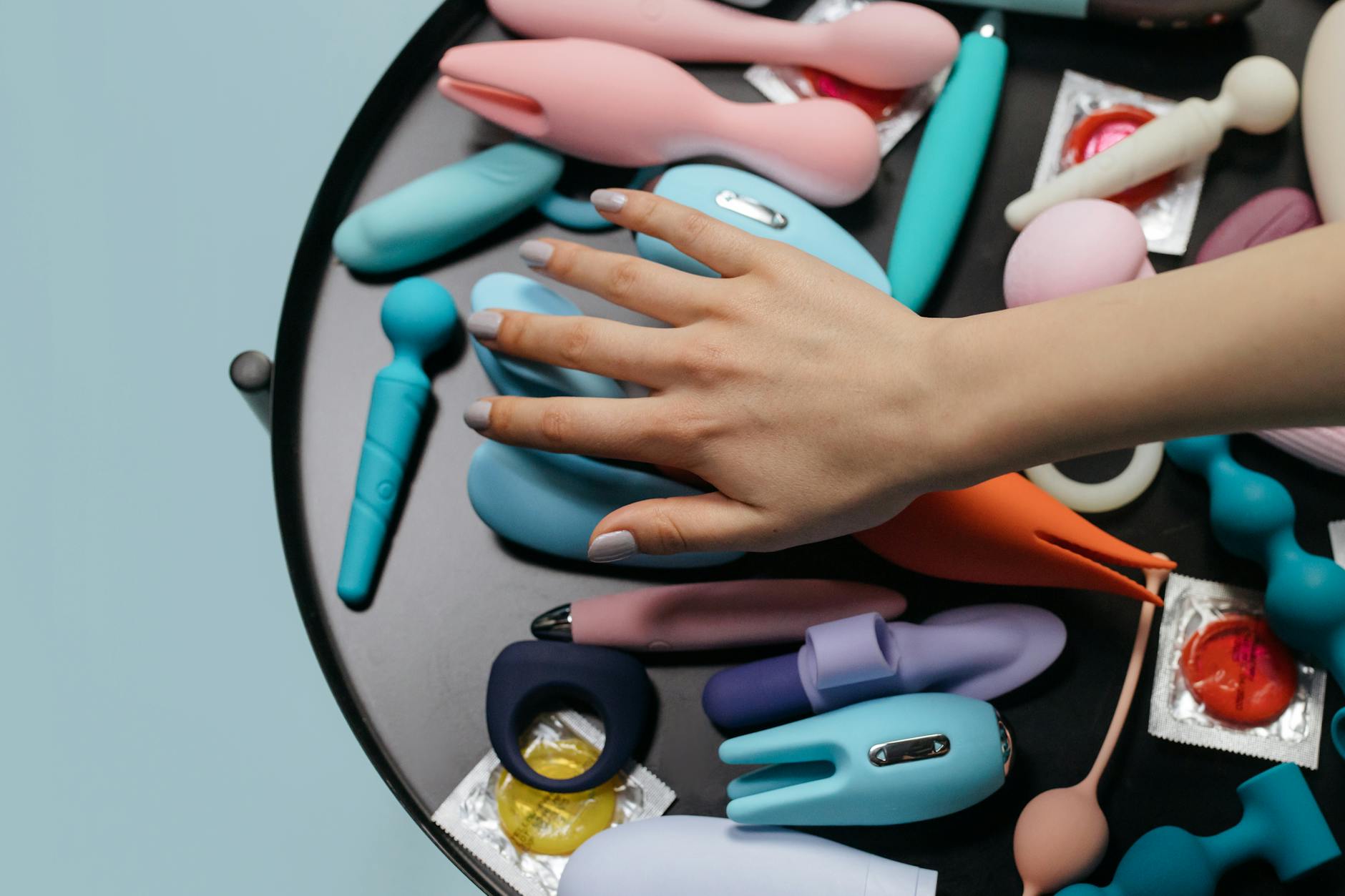
Let's name the thing nobody talks about
Your partner won't discuss pleasure. Not because they don't want it, but because the conversation itself feels too vulnerable, too awkward, or too loaded with years of unspoken tension. They change the subject. They laugh it off. They physically leave the room. And you're left wondering if the problem is you, them, or something deeper.
Here's what I've learned from two decades of couples work: the pleasure conversation doesn't fail because your partner doesn't care about sex. It fails because shame got there first. And shame, by definition, can't be talked away. It can only be worked around.
A lemon vibrator, counterintuitively, can be that workaround. Not because a toy fixes communication. But because it shifts the dynamic from "we need to talk" (which triggers avoidance) to "here's something I'm curious about" (which feels safer). This guide walks you through using a lemon clitoral vibrator as a bridge into the conversation your relationship actually needs.
Why your partner is avoiding this conversation
Before we solve anything, let's understand what's actually happening. When a partner avoids pleasure conversations, it's rarely about low desire or lack of care. It's usually one of these:
Fear of judgment. They've absorbed the message (from family, religion, or past partners) that wanting pleasure is selfish or shameful. Talking about it feels like confessing.
Performance anxiety. If they acknowledge desire exists, they might feel responsible for meeting it. That's a lot of pressure.
Lack of language. They genuinely don't know how to talk about this stuff. No one modeled it. So silence feels safer than sounding foolish.
Relational history. If pleasure conversations in past relationships went sideways (criticism, rejection, affair discovery), they're protecting themselves.
Sensory avoidance. Some people struggle to be present in their own bodies. Talking about sensation forces that presence, which can feel threatening.
None of these are your fault. And none of them mean your relationship is broken. They mean you need a different entry point.
How a lemon clitoral vibrator changes the dynamic
Here's what makes a lemon vibrator different from a direct conversation: it's concrete. It's not abstract. Your partner can see it, hold it, understand that you're talking about a specific object rather than a global indictment of your sex life.
A lem vibrator is also noticeably designed. It's shaped like a lemon. It's not a scary futuristic thing. It's almost cute. That matters because cuteness lowers the shame activation in the brain. You're less likely to feel judged or pathologized when the object in question looks friendly.
And it's yours first. You're not saying "we need this." You're saying "I want to explore this for me." That distinction is crucial. It removes the pressure on them to perform or measure up. It's about your pleasure, not their failure.
Finally, a clitoral vibrator works without their involvement. You can use it alone, introduce it slowly into partnered sex, or somewhere in between. They don't have to opt in immediately. But the existence of the device in your life becomes a quiet ongoing permission to talk about pleasure as something normal.
The setup phase: getting one and keeping it visible
You have to own this decision publicly enough that your partner knows it exists. Not aggressively. Just matter-of-factly.
Step 1: buy it and put it somewhere they'll see it. Your nightstand drawer, not hidden in the back of a closet. The goal is casual normalcy, not secrecy. When they find it (and they will), you want to feel collected enough to say "Yeah, I got one. I wanted to try it out."
Step 2: use it when you have privacy but not paranoia. Alone, obviously. But don't treat it like a state secret. If they hear it humming through the door, don't panic. That's actually helpful. It proves that pleasure is a normal, non-dramatic part of your life.
Step 3: mention it casually once. Not as a production. During a relaxed moment (not during sex, not during conflict), say something like "I'm really glad I got this. It's helping me understand what I actually like." Then move on. Don't force a reaction.
That's it for phase one. You're establishing that owning a lemon vibrator is unremarkable.
When they notice (they will notice)
They'll find out. It might be an awkward conversation. That's actually progress.
If they seem curious, answer directly. "It's a lemon vibrator. I was curious about clitoral vibrators and wanted to explore what feels good for me."
If they seem uncomfortable, don't defend. Just listen. "I can see this feels like a lot. I'm not expecting anything from you right now. I just wanted something for myself."
If they make a joke, laugh along. Don't read it as permission to push. Humor is often how people process discomfort.
If they say nothing, that's information too. They're not ready to engage. That's okay. You still own the device. You still get to use it. And over time, the fact that you're comfortable with your own pleasure might slowly shift their comfort level.
The bridge moment: introducing it into partnered sex (when they're ready)
Don't force this. Wait for a sign. It might come as a question ("So what does that thing actually do?"). It might come as curiosity (they pick it up, they ask how it works). It might come as readiness (they say "want to try that together sometime?").
When the moment arrives, keep it low stakes.
Option A: use it on yourself during sex. During partnered sex, if they're not inside you or if you're in a position where you can reach your clitoris, use the lemon vibrator on yourself while they're present. This takes pressure completely off them. You're managing your own pleasure. They get to watch, participate, or just be present. All three are fine.
Option B: invite them to use it on you. "Want to try using this on me?" Some partners feel less threatened doing something than watching. Giving them an active role can lower their anxiety.
Option C: use it before partnered sex. Bring yourself close to orgasm with the lem vibrator, then transition to partnered sex. This takes the pressure off them to get you there alone. Many partners find this liberating.
Whichever path you choose, the conversation during sex is radically different from the conversation before. You're not debating or negotiating. You're already in the experience. The tone is play, not pressure.
What to say if they get defensive
Some partners panic when a clitoral vibrator appears. They might say things like "Are you saying I'm not enough?" or "Why do you need that if you have me?"
These aren't really questions about the toy. They're fears about their own worth. Answer the fear, not the question.
"This isn't about you. This is about me understanding my body better. That actually helps us both."
"A vibrator is a tool, like we might use lube or try a different position. It's not a referendum on you."
"I can want you and also want this. Both things are true."
You don't need to convince them immediately. Seed the idea and let it sit. Over weeks or months, the existence of a lemon vibrator in your life, paired with your calm acceptance of it, might shift their perspective.
The conversation that comes after
Once they've seen it, seen you use it, or tried it together, doors open. You can finally have the pleasure conversation because you're no longer starting from abstraction. You're starting from "Here's what I like."
These conversations are exponentially easier when there's a reference point. "When I use the lem, I notice I respond better to this pattern." "I want more time for clitoral stimulation." "That intensity feels good."
A lemon clitoral vibrator becomes permission. Permission to have a body. Permission to want something. Permission to ask for it.
For partners who've been avoiding pleasure talk, that permission might be the most important thing a toy can offer.
People also ask
Will using a vibrator make my partner feel replaced or threatened?
Not if you frame it correctly. The difference between a threat and a tool is communication. If you introduce the lemon vibrator as "This helps me know what I like, which helps us," it's additive. If it feels like a secret or a replacement, they'll respond like it is one. Own your pleasure openly, and most partners eventually understand that pleasure and partnership aren't competing forces.
Can a lemon vibrator actually help us talk about sex?
Yes, but not because the vibrator talks. Because the vibrator makes pleasure concrete and undeniable. It's harder to avoid a conversation about something you can hold in your hand. Start with the object, let the conversation follow.
What if my partner is never ready to use it together?
Then you use it alone, and that's still valuable. You still learn your body. You still claim your pleasure. You still model that desire is normal. Some partners come around in months. Some take years. Some never do. But your right to pleasure doesn't depend on their readiness.
Is there a "right" way to introduce a clitoral vibrator to an avoidant partner?
There's no formula, but the pattern that works best is: own it, normalize it, invite them without pressure, and then let time do work. Shame doesn't respond to logic. It responds to repeated exposure to something that isn't shameful. A lem vibrator, used openly and without apology, provides that exposure.
Should I talk to my partner before buying one?
Not if you know they'll say no. You don't need permission to own your body. What you do need is honesty once they find out. The conversation isn't "Can I have this?" It's "I have this, and here's why."
What if they want nothing to do with it, ever?
That's real data about your relationship. A partner who refuses to acknowledge your pleasure, refuses to discuss it, and refuses to be present with it is telling you something important about their capacity for intimacy. A lemon vibrator can't fix that. But it might clarify what you need to decide.
The bottom line
Your partner's avoidance of pleasure conversations isn't a character flaw. It's a symptom of shame that's been baked in for years. That shame doesn't disappear because you ask better questions. It softens because you model that pleasure is ordinary, accessible, and worth having.
A lemon vibrator is a small, intentional way to start that modeling. It's a concrete object that says: I want to know my body. I want pleasure. I'm not ashamed of that. And I'm inviting you into it, not demanding that you solve it.
That shift, over time, changes everything. Not because of the vibrator. Because of the permission it gives you both to finally have the conversation.