Let's talk about the real timeline
Postpartum intimacy feels like a minefield. You've got medical clearance at six weeks, but your body feels nothing like it did before, your hormones are all over the place, and somewhere between the exhaustion and the sensory overload of being touched by a tiny human every waking moment, the idea of pleasure feels... hypothetical.
Here's the thing: you're not broken. And wanting to feel like yourself again isn't selfish. It's necessary.
I see couples in therapy who've gone months or years without sexual contact after childbirth, not because they didn't want it, but because nobody explained how to actually restart. The medical green light is real, but it's only the beginning of the conversation.
What "six weeks cleared" actually means
Your OB said you're medically cleared for sex. That's not the same as "your body is ready." Cleared means your physical wound (whether vaginal tear or cesarean incision) has enough scar tissue to not reopen. It doesn't mean sensation has returned, that hormones have stabilized, or that you're emotionally in the space to be touched.
Most people don't understand this distinction, and the miscommunication between your body's actual readiness and what the clearance implies creates a lot of unnecessary pressure.
Here's what's typically true at six weeks: your incision has healed enough for penetration not to risk rupture. Your hormones are still bottoming out (especially if you're breastfeeding). Your pelvic floor is weaker than it was before pregnancy. Your nervous system is in survival mode. Your perineum might have scar tissue that changes sensation.
So medically cleared and actually ready are two different things.
The hormonal reality of early postpartum
Your estrogen is at some of the lowest levels of your adult life right now. This means the tissues of your vulva are thinner and more fragile. Your vaginal lubrication is minimal. Your skin feels hypersensitive to touch in some places and numb in others.
If you're breastfeeding, prolactin is even higher, which actively suppresses desire. This isn't a sign your body is broken. It's a sign your body is completely focused on producing milk and keeping a newborn alive. Desire is an energy your brain has decided is a luxury.
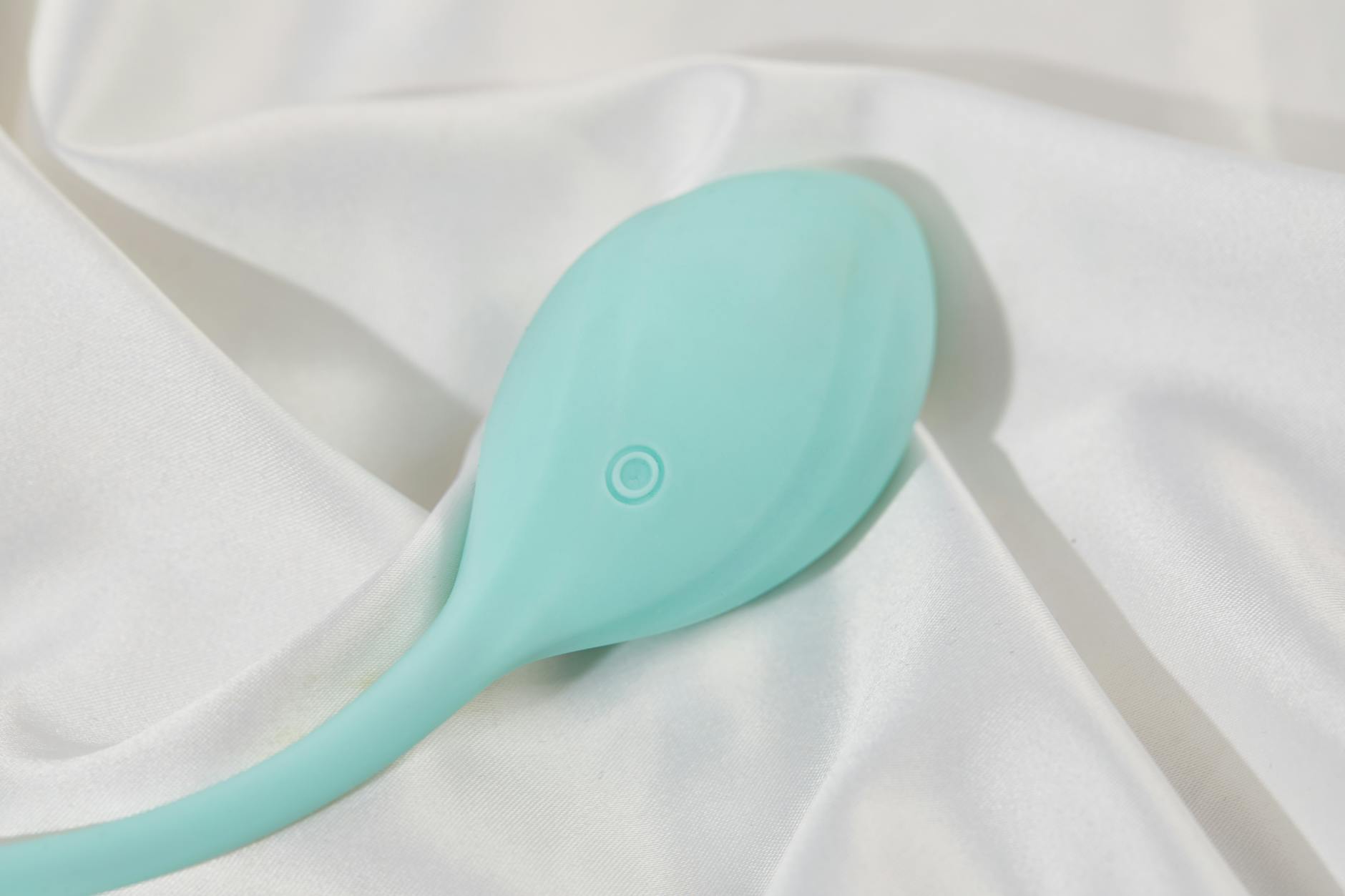
This matters for using a lemon vibrator because it means your usual settings might feel too intense, your typical arousal timeline is longer, and you might need external lubrication even if you never did before.
When is it actually safe to start
Wait until your incision feels fully healed. If you had a vaginal tear, you'll feel it. If you had a cesarean, the scar should feel less tender and you should be able to walk and laugh without pain. That's usually closer to eight to ten weeks, not six.
Wait until you can do a basic pelvic floor contraction without intense discomfort. You don't need full strength. You need the muscle to respond.
Wait until you've stopped bleeding (lochia). Some people bleed for three weeks, some for six. This isn't arbitrary. You're waiting for the wound inside your uterus to close.
If pain appears at any point, stop. Pain is not a thing to push through in early postpartum recovery. Pain is information that something isn't ready.
How to use a lemon clitoral vibrator safely postpartum
When you do feel ready, a lemon vibrator can actually be gentler than partnered sex because you control the intensity, the pattern, and the pace entirely.
Start with external stimulation only. No internal use yet. Your vaginal canal has internal scar tissue you can't see, and the pelvic floor is still relearning how to relax. Give yourself weeks of external play before considering anything internal.
Use lots of lubrication. Water-based, always. Your body isn't making enough of its own right now. This isn't a failure. This is biology.
Start on the lowest setting. If your lemon vibrator has multiple patterns, begin with the gentlest pulse, not the intense suction. Your nerve endings are hypersensitive right now. What felt mild three months ago might feel overwhelming now.
Keep sessions short. Your nervous system is still in sympathetic overdrive (fight-or-flight). Pleasure takes longer to build. Stop before you feel frustrated. Twenty minutes is a good ceiling. Five minutes might be enough.
Wait at least ten to twelve weeks before even considering internal use with any toy. This is not a hard rule. This is a conservative starting point. Your body will tell you when it's ready.
The mental piece is not optional
Your body isn't the only thing that's recovering. Your brain spent months preparing for childbirth and is now in full-survival mode. Pleasure requires you to be somewhat mentally present and somewhat relaxed. Both of those are hard when you haven't slept six hours in a row in two months.
This is where many people get stuck. They assume that because they're medically cleared, they should want sex. The shame of not wanting it, combined with the pressure to reconnect with their partner, creates a kind of forced start that rarely goes well.
Give yourself permission to not want it yet. You're not broken. You're normal.
When you do feel a flicker of interest, honor it. That flicker matters. It's your body saying something is beginning to come back online.
What to tell your partner
If you have a partner, the most valuable conversation you can have is separate from the timing of sex itself. Tell them: "My body is recovering. My brain is exhausted. Pleasure is going to feel different for a while, and I don't know when I'll want sex again. What I need right now is patience, and I need you to not ask me about it."
A lot of partners wait for medical clearance and then assume that means permission to ask. It doesn't. It means anatomically, penetration is lower risk. It doesn't mean you're ready.
If you want to explore pleasure on your own with a lemon vibrator, that's separate from partnered sex. You don't need permission or a timeline for that. You need privacy and a moment when you're not in survival mode.
When to see a specialist
If pain persists beyond twelve weeks postpartum, see your OB. If sensation hasn't started to return by three months, ask for a pelvic floor physical therapy referral. If you're at four months and you feel no desire at all and you're not breastfeeding, talk to your doctor about hormone levels.
Most of these things resolve on their own. Some don't. The difference between those two is whether you're paying attention.
The timeline is yours
Postpartum recovery for pleasure isn't a race. Some people feel ready at four months. Some at nine. Some at two years. All of these are normal. The pressure to get "back to normal" quickly is often where the real damage happens.
Your body grew a human. It went through enormous physical and hormonal change. Pleasure will come back, but on your timeline, not on the calendar. A lemon vibrator can be a useful tool for exploring what your body feels like now, when you're ready to explore. Until then, rest is the right choice.
FAQ: Postpartum Pleasure and Lemon Vibrators
How soon after delivery can I use a vibrator?
Wait until your bleeding has completely stopped and your incision (internal or external) feels fully healed with no pain. For most people, this is eight to twelve weeks, not the six-week medical clearance mark. Pain is a hard stop. If anything hurts, wait longer.
Is it safe to use a lemon vibrator internally postpartum?
External-only stimulation for the first ten to twelve weeks is the conservative approach. Even then, wait for a signal from your body that your pelvic floor is ready to relax around something. If you had a significant tear or cesarean, err toward waiting longer. Internal sensation can feel very different while scar tissue is still reorganizing.
Will using a lemon sucker affect my milk supply?
No. Pleasure and orgasm don't affect lactation. The release of oxytocin during orgasm is the same hormone involved in milk letdown, but that connection doesn't work in reverse. Pleasure won't increase or decrease supply. Stress reduction might help supply indirectly, but the vibrator itself has no mechanical effect on milk production.
What if I have no desire at all, months postpartum?
That's extremely common, especially if you're breastfeeding. Prolactin suppresses sexual desire as a feature, not a bug. It's your body's way of focusing all your energy on the newborn. If you're past six months and still feel nothing, and you're not breastfeeding, check in with your doctor about hormone levels. If you are breastfeeding, low desire is normal and doesn't mean something is wrong with you.
Can I use a lemon clitoral vibrator if I'm breastfeeding?
Absolutely. Nothing you do with a vibrator affects milk or milk safety. You can breastfeed and explore pleasure with a lemon vibrator. The limitation isn't biological. It's often that breastfeeding is so physically intimate that the idea of more touch feels overwhelming. That's real, and it's separate from safety.
What if my partner wants sex before I'm ready?
Tell them. Directly. "I'm not ready yet" is a complete sentence. If they push, that's a separate conversation you might want to have with a therapist. Pressure to resume sex before you're ready is not something to accommodate. Recovery takes time, and a good partner will wait.
You deserve this moment
Postpartum recovery isn't just about your incision healing. It's about your body remembering that pleasure is possible, that you deserve to feel good, and that your needs matter even though you're focused on a tiny human who needs everything from you. A lemon vibrator, when you're ready for it, can be part of that reconnection. But the timeline is yours. Trust it.
If you have questions about your specific recovery or timeline, reach out to your OB or a pelvic floor physical therapist. And if you're struggling with desire, shame, or pressure from a partner, that's what therapists like me are here for. You don't have to figure this out alone.