Let's be real about rediscovering solo pleasure
You spent years, maybe decades, having sex as a partnered activity. Your body learned rhythm and response in someone else's presence. Now you're alone, and the idea of touching yourself for pleasure feels either awkward, mechanical, or somehow wrong. That's not a failure. That's your nervous system catching up to a new reality.
Here's what actually happens when you transition from partnered to solo pleasure, and why a tool like a lemon vibrator changes the game.
Why your body feels like a stranger right now
When you've been sexually active with a partner for years, your arousal circuitry gets wired around their presence. Your brain learns to respond to their touch, their rhythm, their timing. You're not just experiencing physical sensation. You're processing anticipation, performance, responsiveness to someone else's needs.
Then that relationship ends. And suddenly you're supposed to touch yourself with the same confidence you had when someone else was doing it. Except your nervous system doesn't work that way.
Solo pleasure requires a different kind of focus. It's not performance. There's no one to please but yourself. And that can feel weirdly vulnerable, even alone. Your brain might be waiting for cues that will never come. You might move too fast, trying to get to climax instead of actually feeling pleasure. You might freeze up entirely, thinking about how long it's been, whether you're doing it "right," whether this means something about who you are.
It doesn't. It means you need to retrain your arousal response in a new context.
How lemon vibrators shortcut the awkwardness
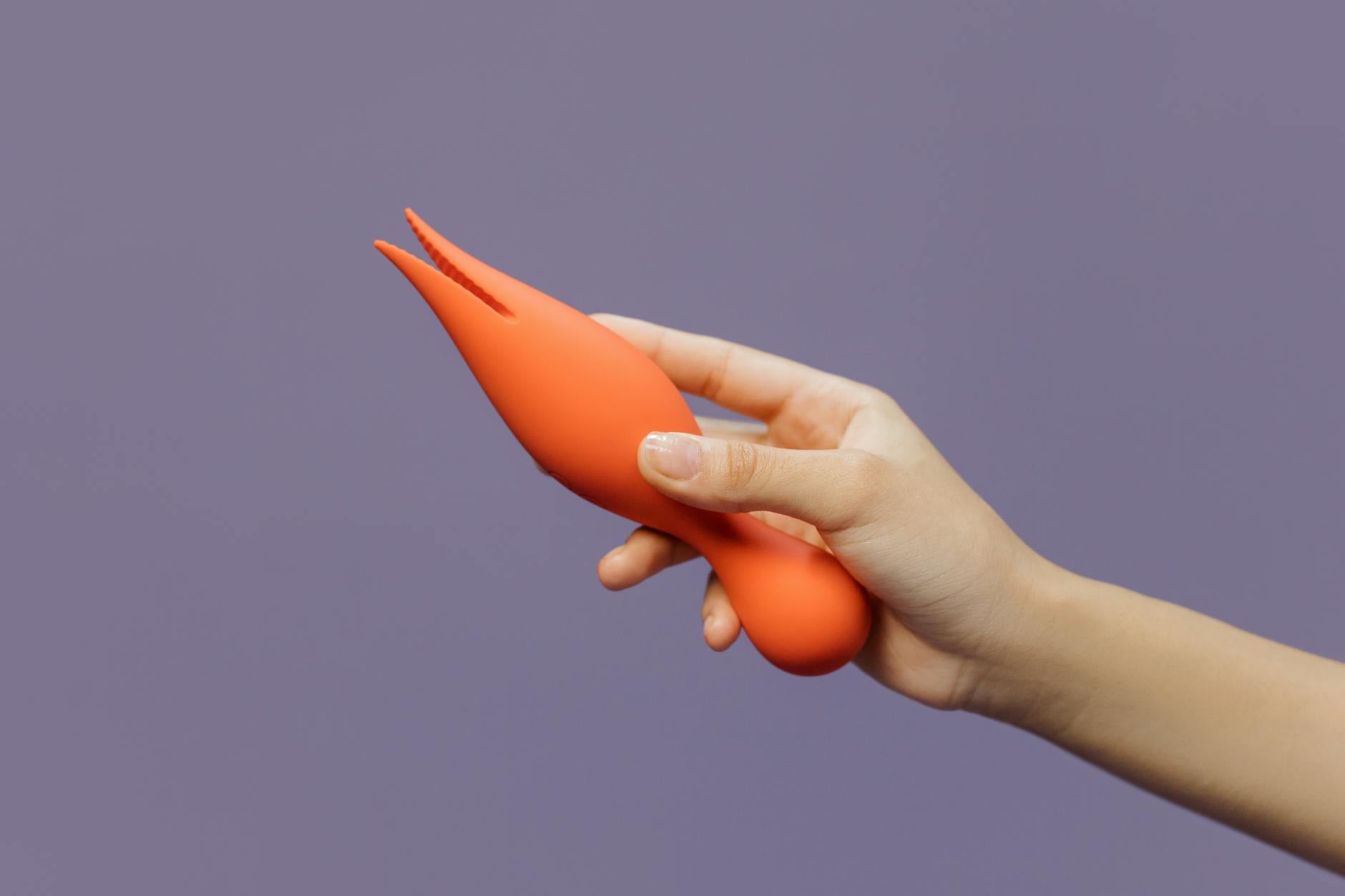
A lemon clitoral vibrator does something specific that your hand can't easily do. It provides consistent, external stimulation that doesn't require you to perform any particular rhythm or technique. You don't have to think about "am I doing this right." You just have to feel.
That consistency is huge when your nervous system is already in unfamiliar territory. A toy like the Lem takes one variable off the table. You're not managing technique, pace, or pressure. You're just receiving sensation and noticing what your body actually wants.
This is especially useful if you spent years adapting your pleasure to a partner's preferences. You might have learned to finish quickly, or to enjoy penetration more than clitoral stimulation, or to prioritize your partner's arousal over your own. A vibrator, used solo, lets you unlearn those patterns without judgment.
The first time back: what to expect
If it's been a while, your first solo session might not feel amazing. That's normal. You might feel self-conscious even though you're alone. Your body might not respond the way you expected. You might feel nothing at all, or you might feel something completely different than you remember.
Don't interpret this as a sign that something is broken. Interpret it as information. Your nervous system is in a different state now. You have different hormones, different stress levels, different emotional context. Solo pleasure is a different sensation altogether from partnered sex.
Here's how to approach the first time with a lemon vibrator:
Start without pressure. Don't aim for orgasm. Aim for curiosity. Turn it on the lowest setting and just explore. What patterns feel interesting? What makes you want more, versus what feels like nothing?
Take your time. If you spent years in partnered sex that lasted 10 or 20 minutes, solo pleasure might take longer to build. Your body isn't responding to another person's energy. You're generating your own arousal from scratch. Budget 20-30 minutes the first time, with zero expectation of climax.
Let it be boring at first. Seriously. You might not feel much. That's your nervous system still expecting to be in performance mode. Keep using the vibrator anyway. Over time, the novelty wears off, the awkwardness fades, and your body remembers how to respond to pure sensation.
Building a routine that actually works
One of the biggest differences between partnered and solo pleasure is that solo pleasure requires intention. No one is initiating with you. No one is setting the mood. You have to do that for yourself, which sounds empowering in theory and feels like homework in practice.
The trick is to make it feel easy, not another thing on your to-do list.
Pick a time when you actually have privacy and mental space. Not late at night when you're exhausted. Not in a rush before work. Pick a time when you could realistically spend 20 minutes alone without interruption. For some people that's early morning. For others it's a weekday afternoon.
Create a tiny ritual. Light a candle. Put on music you actually like, not something you think is "sexy." Make sure your phone is somewhere you can't see it. This isn't about creating some elaborate fantasy. It's about giving your nervous system permission to settle into the moment.
Use the vibrator in a few different patterns or intensities, even if one feels obviously better. Your nervous system needs time to recalibrate. What doesn't feel good today might feel revelatory next week. What feels great this time might feel too much next time. That variability is fine. You're learning, not training.
Why partnered sex doesn't "count" as solo pleasure
If you've started dating or hooking up since the long relationship ended, you might assume you don't need solo pleasure. That's a trap. Partnered sex, even good partnered sex, isn't a replacement for solo pleasure. They're completely different experiences.
Solo pleasure teaches your body to respond to your own touch, your own rhythm, your own desires without filtering through someone else's needs or preferences. That knowledge transfers into partnered sex. Partners find you more responsive, more confident, more clear about what you actually want. It's the opposite of selfish. It's the foundation of better partnered sex.
If you're with someone new and still figuring out solo pleasure, keep going. They're not mutually exclusive. In fact, developing both simultaneously usually results in better communication with your partner about what actually works for you.
When to use the lemon vibrator versus when to go solo
Honestly? Use the vibrator whenever it feels good. The goal isn't to graduate from the vibrator back to just your hands, like the vibrator is a training wheel. The goal is for solo pleasure to feel easy and good, however you make that happen.
That said, some people find that mixing approaches helps break patterns. Maybe you use a lemon clitoral vibrator for five minutes, then switch to your hands. Maybe you use it every other session. Maybe you find that the vibrator is exactly what you needed and you never want to go back, and that's completely fine too.
Your pleasure doesn't need to follow a progression. It just needs to feel good to you.
The emotional part is often bigger than the physical part
Here's what I see most often in my practice: people can figure out the physical part relatively quickly. Vibration feels good. Orgasms happen. The body remembers. But the emotional part takes longer.
You might feel guilty for enjoying yourself after a breakup. You might feel like solo pleasure means you should be "over it" by now. You might feel weird about being sexual on your own after years of making sex something you did with someone else. Those feelings are real, and they're worth acknowledging.
Solo pleasure isn't about proving you're fine or that you've moved on. It's about reclaiming your own body. Sometimes that feels empowering immediately. Sometimes it feels uncomfortable for a while before it clicks. Both are okay.
If you're struggling with the emotional piece, especially if the relationship ended in a painful way, talking to a therapist about it can help. Pleasure and grief can coexist. You can be healing and also exploring what your body wants. These aren't contradictory.
FAQ
How long does it usually take to feel comfortable with solo pleasure again after a long relationship?
It varies wildly. Some people feel comfortable within a few weeks. Others take months. There's no normal timeline. What matters is that you're exploring without judgment. If you're not feeling anything after a month of regular exploration, that might signal that something else is going on. That's worth talking to a therapist or doctor about, not because something is wrong with you, but because pleasure is information about your overall wellbeing.
Is it normal to feel guilty or awkward about solo pleasure after being partnered for years?
Completely normal. Your nervous system learned that sex was something you did with another person. Shifting back to solo pleasure requires your brain to recategorize what touch means, what pleasure is for, whether it's "allowed." That takes time and repetition. Keep going anyway. The awkwardness fades.
Can I use a lemon vibrator if I'm starting to date someone new?
Absolutely. Solo pleasure and partnered sex serve different purposes. Solo pleasure teaches your body what it actually responds to, independently. That knowledge makes you a better, more confident partner. Most people benefit from having both. In fact, dating someone new while also maintaining a solo practice usually leads to clearer communication about what you want in partnered sex.
What if the lemon vibrator doesn't feel like anything the first few times?
That's common. Your nervous system might still be in partnered-sex mode, waiting for external cues to feel aroused. Keep using it. You're not looking for fireworks on the first try. You're teaching your body that this sensation is safe and pleasurable. That takes repetition. Most people report that the vibrator feels dramatically better after 3-5 sessions, once the novelty wears off and your body settles into the sensation.
Should I feel like I need to have an orgasm when I use a vibrator?
No. Orgasm is a nice outcome, but it's not the goal. The goal is to feel pleasure and reconnect with your own body's responses. Some sessions you'll come. Some you won't. Both are valuable. If you're always chasing orgasm, you might miss the pleasure that's already there. Shift your focus to sensation instead, and orgasms usually follow more naturally.
Is solo pleasure less important than partnered sex?
Not even close. They're equally important, and they do different things. Solo pleasure teaches you about your own body. Partnered sex teaches you about intimacy and communication. You need both. Think of solo pleasure as the foundation that makes partnered sex better, not as a lesser alternative.
The path forward
Rediscovering solo pleasure after a long relationship is a genuine transition. Your body and nervous system need time to adjust to a new way of experiencing sensation and sexuality. That adjustment is worth the effort because it teaches you about yourself in ways partnered sex never can. You learn what you actually want, separate from your partner's preferences. You learn your own rhythm. You learn that your pleasure matters, on its own, even when no one else is present.
A tool like a lemon clitoral vibrator makes that transition easier by removing some of the variables your brain is already confused about. You don't have to think about technique or pace. You just have to feel. And feeling, it turns out, is exactly what your nervous system needs right now.
If you're struggling with this transition, especially the emotional part, I'm here to help. Reach out anytime.